Patient information
Crash diets don't work!
There is a lot of pressure in society to stay slim.

There is great pressure in society to stay thin, and a thin body is considered a symbol of being healthy and beautiful, while being overweight is associated with a person being undisciplined and lazy.
These high demands from society contribute to weight stigma. Someone who is fat is considered lazy, greedy, and unhealthy. Weight stigma has been shown to have a negative impact on the health, behaviour, and social behaviour of individuals who are overweight. Furthermore, this prejudice contributes to low self-esteem, depression, anxiety, less physical exercise, emotional eating, and the person not eating in front of others but rather in secret. Those who experience weight stigma are slower to seek help if something goes wrong, experience loneliness which leads them to withdraw socially, and face difficulties in new relationships.
Prejudice regarding weight and the belief that everyone should be thin can fuel a negative self-image and body dissatisfaction, and consequently an unhealthy relationship with food, such as binge eating and bulimia. Those who experience weight stigma are more likely to become obese. Dieting does not lead to weight loss, but on the contrary, increases the likelihood of weight gain and thereby contributes to the obesity epidemic. The obesity epidemic has been ongoing for more than three decades, and despite a vast number of diets and books, there is little gain.
Most of us know what dieting and diets are. Many children learn early on what dieting is, and it is common for them to get this information from parents, media, and advertisements. Pressure from the media and society to be thin increases the likelihood that people will be dissatisfied with their body shape and weight, have a worse self-image, and attempt to restrict food intake to influence weight. However, it has been shown that individuals who restrict their food are at an increased risk of binge eating and therefore become heavier than they were before dieting. There is also an increased likelihood of eating disorders, with dieting being a major risk factor. Food restriction often increases the craving for certain foods, and thus dieting can have the opposite effect, where the individual eats more and gains weight. When one diet fails, there is always a new one promising that now, finally, everyone will get thin. The reality is that most of these diets do not work at all. Although there are more diets now than ever before, overweight and obesity are much more common than before, and the individual ends up in a sort of vicious cycle of dieting and relapsing. Since dieting is not a permanent state, the time always comes when the individual steps off the path defined by the diet and "falls." This fall can lead to great dissatisfaction, a sense of defeat, and failure. In many cases, these feelings lead people to seek comfort in food, which in turn causes weight gain, and often the individual ends up being heavier after the diet than before they started.
Consequences of dieting include, among others:
Basal metabolic rate decreases
Increased risk of binge eating
Irritability and mood swings
Anxiety
Depression
Obsession
Author:
Rut Eiríksdóttir, nurse
You can read Rut's BS thesis on the harmful effects of dieting here:
https://skemman.is/bitstream/1946/21655/1/RUTBS-20150526.pdf

More articles
Diet after bariatric surgery
Here, Dagný Ólafsdóttir goes over dietary guidelines that are important to keep in mind when undergoing bariatric surgery.
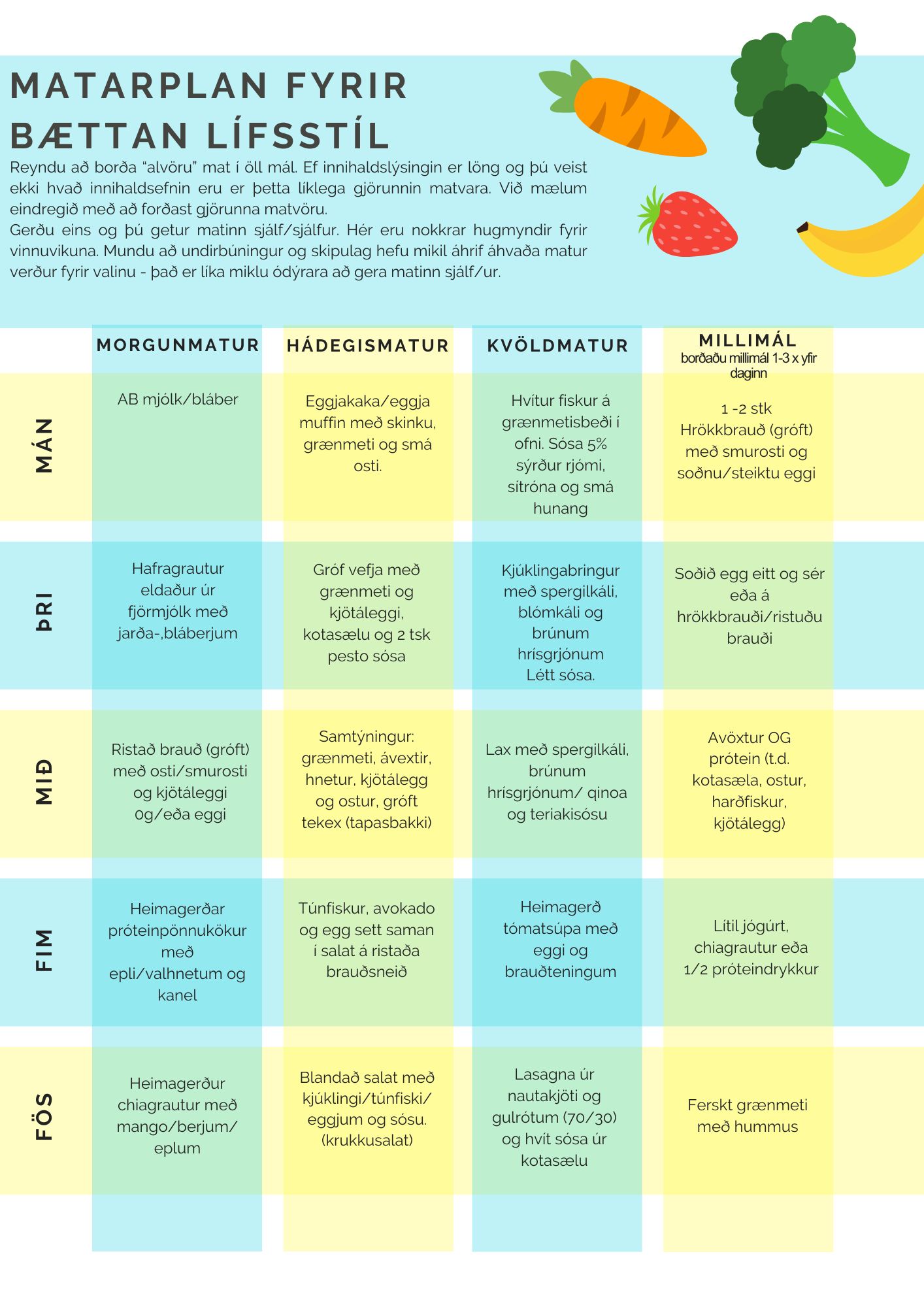
Meal ideas
What should I eat? Ideas for meals.

Pain medication after bariatric surgery
It is important to choose the right painkiller.

Constipation, what can be done?
Constipation is a very common complication after bariatric surgery.