
How we can help
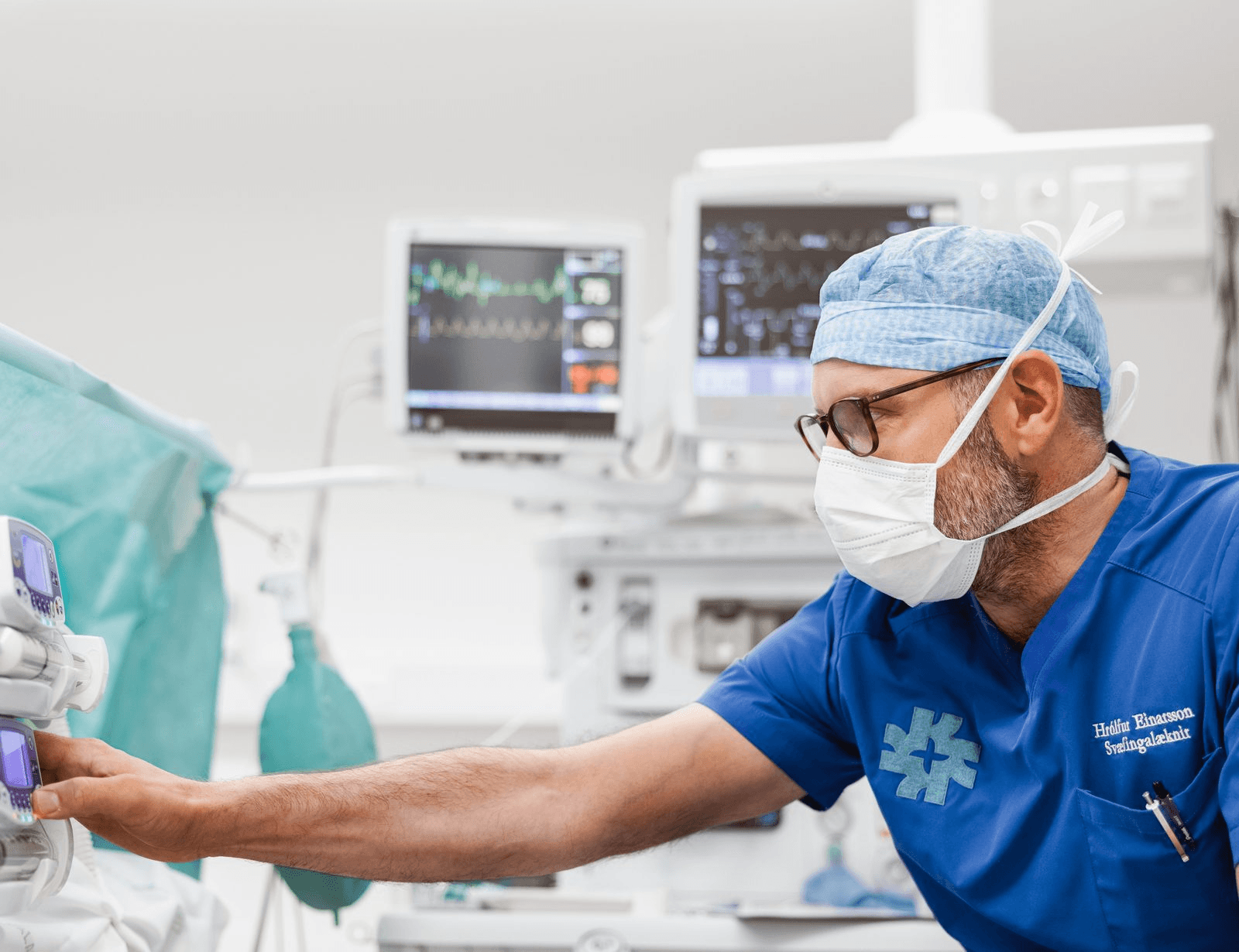
At Klíníkin, specialists in anesthesia and intensive care medicine work alongside intensive care nurses. Four operating rooms and a recovery ward are equipped with modern monitoring devices, and the team works according to the World Health Organization's Surgical Safety Checklist for every procedure.
We offer general anesthesia, where you sleep throughout the operation; spinal anesthesia, which is common for joint replacements and surgeries on the lower part of the body, usually combined with sedation to keep you comfortable; ultrasound-guided nerve blocks (regional anesthesia) that numb a specific part of the body, such as a shoulder, hand, or leg, providing good pain relief for the first hours after surgery; and local anesthesia with or without sedation for minor procedures and endoscopies.
After surgery, you will receive multimodal pain therapy aimed at minimizing the use of opioids and accelerating recovery.

How we can help

Before you come in for surgery, you will answer a health questionnaire. An anesthesiologist will review your responses, medical history, medications, and allergies to assess whether further investigations, such as a blood test or an electrocardiogram (ECG), are needed. If a phone call or interview is required, the anesthesiologist will contact you before the day of the procedure.

No solid food for the last 6 hours before surgery. Clear liquids (water, clear juice, coffee/tea without milk) are allowed up to 2 hours before surgery – drink well until then. Do not smoke, use nicotine, or drink alcohol in the last 24 hours. Take your usual morning medications with a sip of water unless the anesthesiologist instructs otherwise; blood thinners, diabetes medications, and GLP-1 agonists often need to be stopped or adjusted – you will receive specific instructions.

Leading experts in their field
The team
Leading experts and outstanding service.
Anesthesia and sedation are included in the price of the procedure and are not charged separately, except under the framework agreement of Iceland Health (Sjúkratryggingar) with medical specialists. See the price list of the respective specialty for further details.
Further information on patient co-payments can be found on the Iceland Health website: sjukra.is
Before surgery. You complete a health questionnaire and an anaesthetist assesses your health, medication and allergies. You receive instructions on fasting and on which medicines to take or skip on the morning of surgery.
On the day of surgery. The anaesthetist meets you before the procedure begins, goes through the anaesthetic plan and answers your questions. During the procedure, the anaesthesia team continuously monitors your breathing, circulation and depth of anaesthesia.
After surgery. In the recovery room you are monitored until you are fully awake, your pain is under control and you are free of nausea. Day-surgery patients go home accompanied by an adult and must not drive for the first 24 hours or be alone for the first 24 hours; those staying overnight move to the inpatient ward.
Frequently asked questions
Is anesthesia dangerous?
Can I wake up in the middle of a surgery?
Will I experience nausea after anesthesia?
When can I drive after general anesthesia or sedation?
