Patient information
Constipation, what can be done?
Constipation is a very common complication after bariatric surgery.
Constipation is a very common complication after bariatric surgery. It is common for individuals to experience bowel movements less frequently than before, which does not necessarily mean you have constipation. Individuals who undergo a gastric sleeve experience constipation more often than those who have undergone a bypass.
It is common to experience constipation for up to 6 months after surgery, but bowel movements usually return to normal after that time.
Generally, you are considered to have constipation if more than 3 days pass between bowel movements. Bowel movements should also be soft and easy to pass.
Main examples of symptoms of constipation:
Stomach pain or abdominal cramps.
Bowel movements less than 3 times a week.
Bloated abdomen.
Have the urge to pass stool but cannot.
Discomfort.
Nausea.
Reduced feeling of hunger.
Why do you get constipation after surgery?
Fluid intake is too low.
Not enough fibre.
Slower digestion due to reduced food intake and hormonal effects following surgery (also applies to medications like Ozempic and Wegovy).
Large amount of protein in the diet.
Large amount of milk in the diet.
Iron and calcium from vitamins.
Painkillers (opioid-based).
Less physical activity.
What can you do to get your digestion back on track?
NUTRITION AND EXERCISE:
Drink plenty of fluids.
Exercise.
Eat a high-fibre diet (vegetables, fruits, beans, whole grains). Kiwi can also work very well.
Take one tablespoon of flaxseeds or chia seeds twice a day and drink plenty of water with it.
Try reducing your intake of dairy products.
Have regular toilet visits (do not hold it in).
Sit with your feet elevated (e.g., place a footstool under your feet).
Avoid medications that cause constipation.
Sometimes these usual remedies are not enough, and then it is sometimes necessary to resort to medication.
MEDICATIONS:
Bulk-forming laxatives, it is always necessary to drink plenty of fluids with such medications because they draw fluid into the colon, thereby increasing stool volume and stimulating bowel movements.
Psyllium/HUSK – (can be taken daily if well tolerated) Make sure to drink plenty of fluids with it – technically not a medication but has a bulk-forming effect.
Magnesium (Magnesia medic, available over-the-counter) and Magnesia Dac (prescription only). Usually well tolerated.
Medilax/Sorbitol – but can cause dumping symptoms in some individuals.
Medications that increase bowel movement: Such treatment is always short-term treatment and should not be repeated often.
Microlax, works at the very bottom of the rectum, softening the stool and speeding up evacuation.
Laxoberal drops, increase bowel movements and speed up emptying. Can cause a decrease in potassium with long-term use.
Senokot (unlicensed medicine). Affects bowel movements.
Toilax, affects bowel movements.
If the above advice is not enough and you are still suffering from constipation, do not hesitate to contact us at Klíníkinni.
Sources:
https://www.heilsuvera.is/markhopar/sjukdomar-fravik-einkenni/haegdatregda-hja-fullordnum/
https://throunarmidstod.is/svid-thih/lyfjasvid/leidbeiningar-um-lyfjaval/meltingarsjukdomar/
Eltorki, M., Leong, R., & Ratcliffe, E. M. (2022). Kiwifruit and Kiwifruit Extracts for Treatment of Constipation: A Systematic Review and Meta-Analysis. Canadian journal of gastroenterology & hepatology, 2022, 7596920. https://doi.org/10.1155/2022/7596920

More articles
Diet after bariatric surgery
Here, Dagný Ólafsdóttir goes over dietary guidelines that are important to keep in mind when undergoing bariatric surgery.
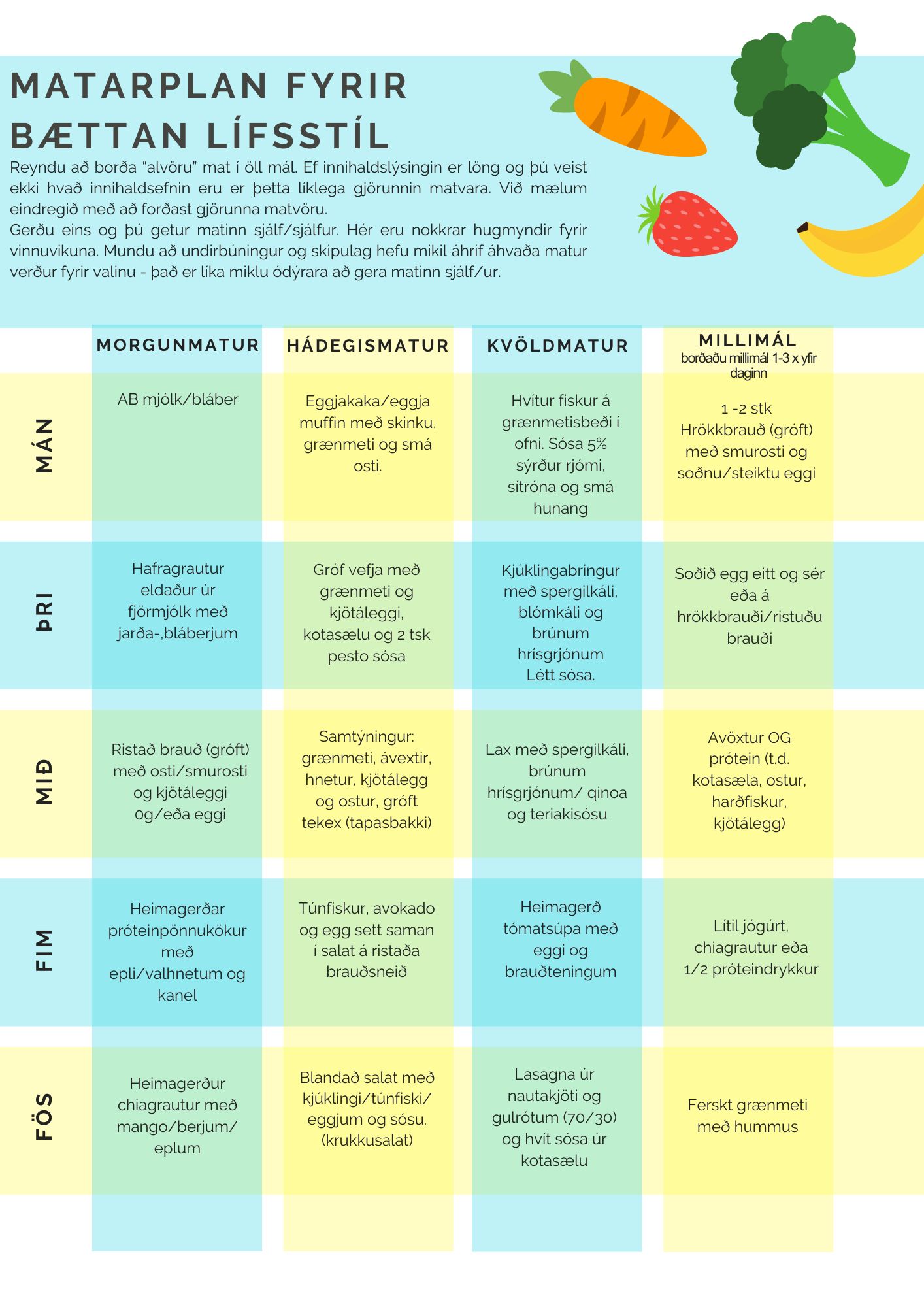
Meal ideas
What should I eat? Ideas for meals.

Pain medication after bariatric surgery
It is important to choose the right painkiller.
Constipation, what can be done?
Constipation is a very common complication after bariatric surgery.